Berachain
Financial apps and data infrastructure for a blockchain
- Role: Software Engineering
- Company: Berachain
- Explore BeraHub ↗

Overview
Trading, rewards, stablecoin and lending products, supported by shared data infrastructure.
Berachain is a blockchain with apps for swapping tokens, earning rewards, minting its stablecoin and lending. I joined the product team before mainnet and helped complete features needed to launch its core products.
As Lead Full Stack Software Engineer and BeraHub’s technical owner, I worked with frontend, product, design and smart-contract teammates on BEX, Earn, Validators, Honey and Bend. I co-designed Beep, the data service behind the product interfaces, and led its implementation. We continue to ship updates and manage releases together, translating protocol changes into interfaces and APIs.
Product scale & team outcomes
BeraHub
15k users
Served by the products our team built and maintained.
BeraHub
$2B TVL
Across the DeFi experiences supported by BeraHub.
BeraHub
60% shorter load times
Through query optimization, caching and SSR across the product apps.
Beep
~98% less time
Full-history reindexing after replacing subgraphs with Beep.
Beep
4–8× faster
After the migration, Beep returned product data to end users faster than subgraphs.
Beep
~$16k/month
Lower recurring data-infrastructure costs after the Beep migration.
Making token swaps and rewards usable
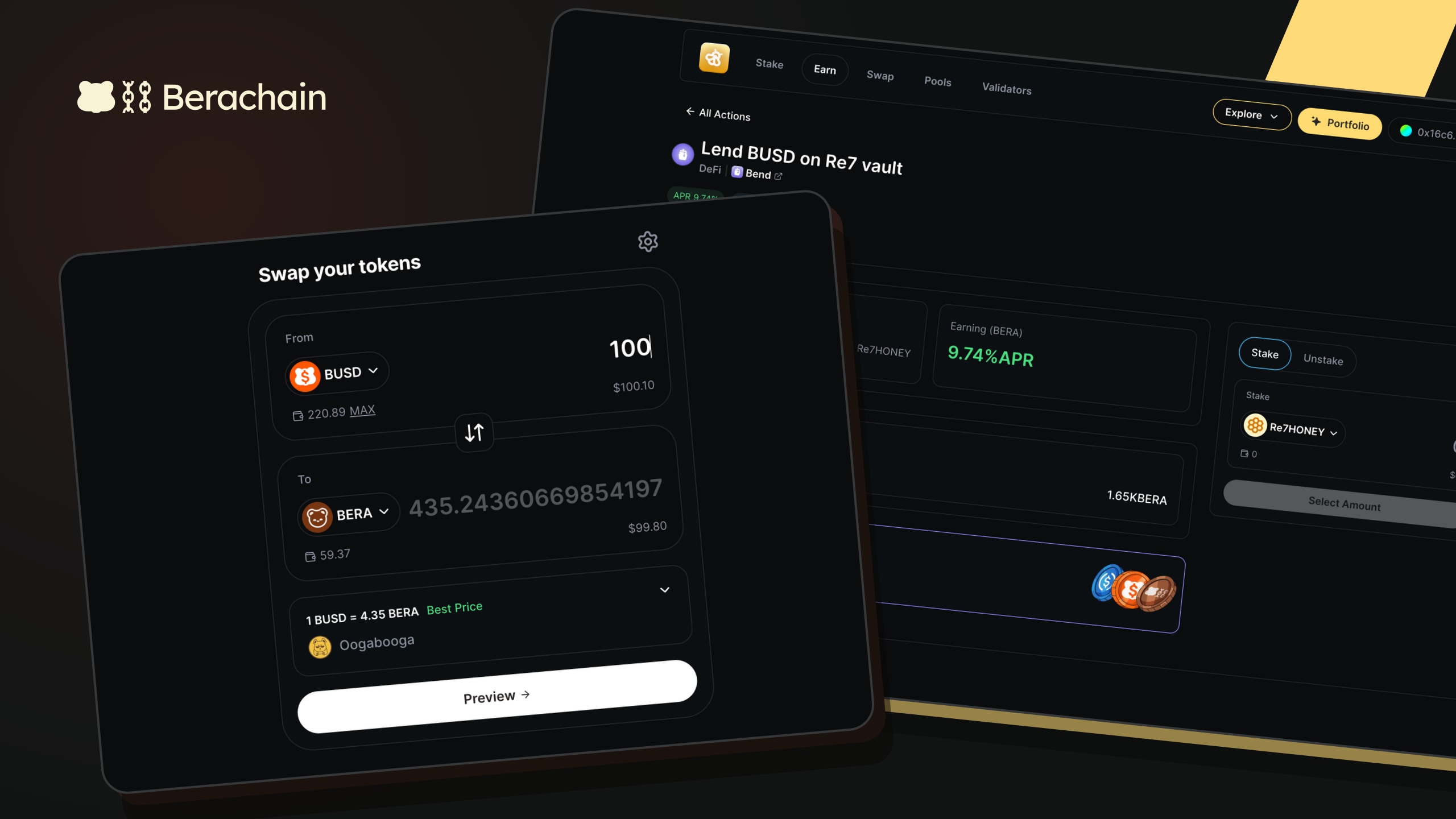
I built the exchange experience for BEX in BeraHub, where users swap tokens and inspect pool data. My work covered the swap interface and supporting GraphQL queries. It had to account for slippage, failed transactions and the freshness of live data so users could understand an action before and after submitting it.
I worked on presenting multiple quote and minting paths as one coherent swap flow. The page combines MetaAggregator quotes from Enso, KyberSwap and Haiku with native minting routes, including ERC-4626 vaults. BEX itself is built on a Balancer V2 fork.
I also worked on Earn and Validators, the interfaces for Berachain’s Proof of Liquidity rewards system. Earn lets users stake eligible tokens and track rewards; Validators shows how validators direct incentives to eligible vaults. Building the Validators page meant bringing together protocol contract state and data from the network’s CometBFT consensus layer.
Rebuilding the data layer
I co-designed Beep with the team and led its implementation. The service turns blockchain events into data the product apps can query. Its indexer and API replaced the previous subgraph-based backend. Cutting historical reindexing from days to hours meant fixes and protocol updates could reach the products sooner.
My responsibilities spanned the indexing approach, schema-first API and OpenAPI documentation, deployment topology, Helm charts, performance and Prometheus monitoring—from design through production.
Replacing the previous subgraph provider also helped cut recurring data-infrastructure costs by roughly $16k per month.
Beep

FULL-HISTORY REINDEXING / SUBGRAPHS → BEEP
The Beep migration cut full-history reindexing time by roughly 98%, shortening the path from a data fix to a product release.
WHAT I BUILT
Event-native indexing
Backfill and live data in one pipeline.
A schema-first API
Documented, predictable data contracts.
Production delivery
Caching, observability and deployment designed together.
Building for the edge cases
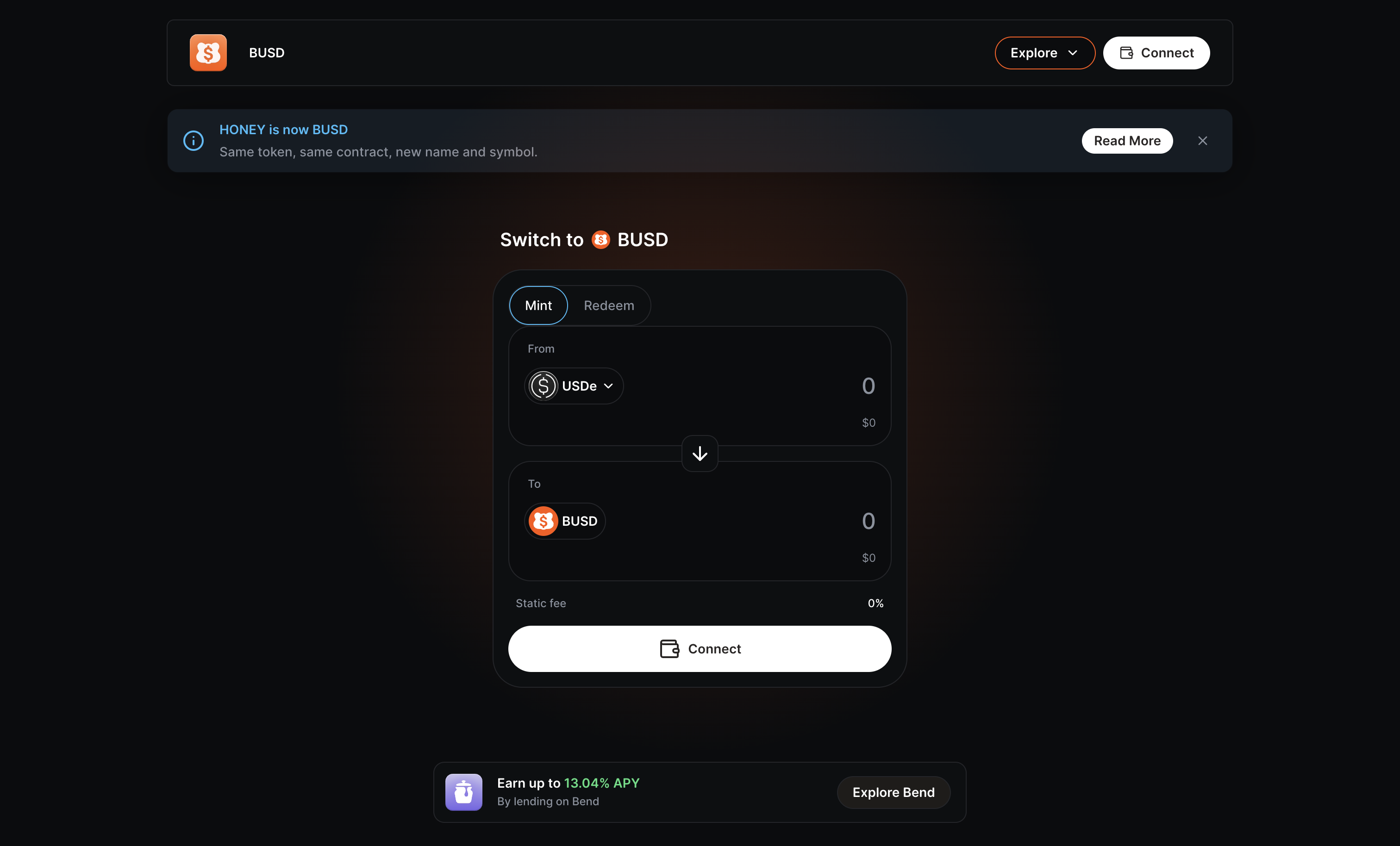
Honey (now Bera USD) is Berachain’s stablecoin app. I worked on minting and redemption flows that respond to changes in collateral state. In basket mode, users can no longer choose a single asset for redemption, so the interface needs to make that change clear.
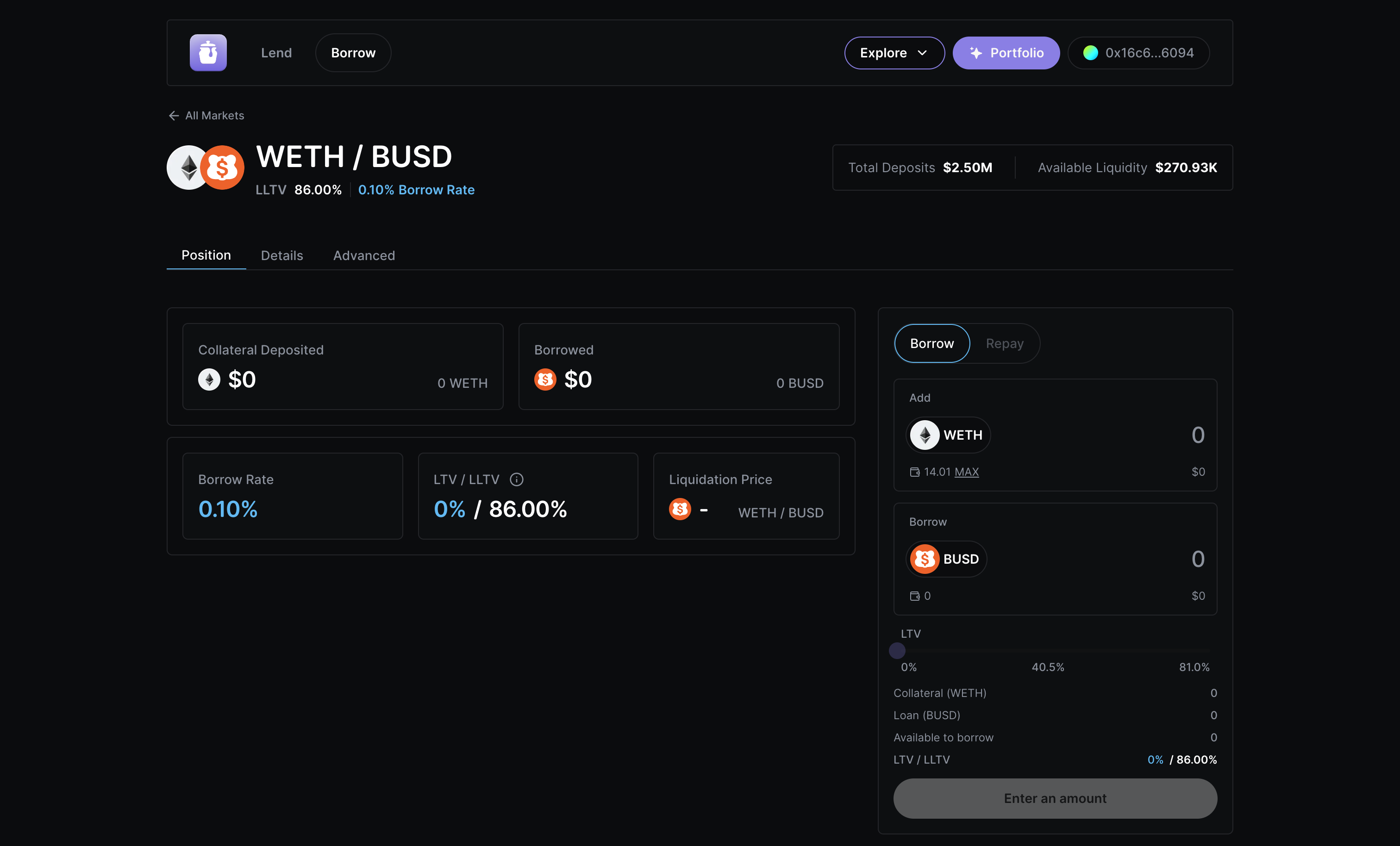
Bend is Berachain’s lending app, built on a fork of Morpho. I contributed to its product features, releases and maintenance, keeping the interface aligned with the behavior of the underlying contracts.
Keeping a product suite consistent
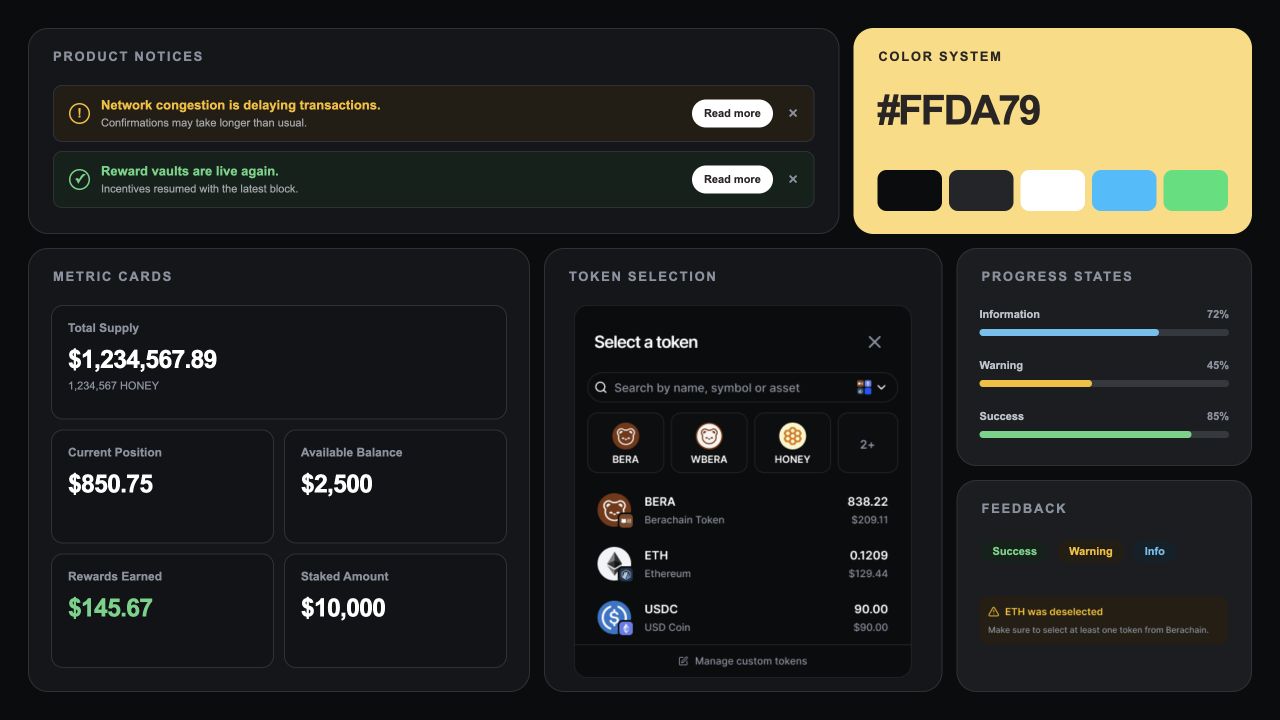
I worked with the team on a design system shared across the frontend apps and documented in Storybook. We also separated transaction and protocol logic from UI components, making interface changes easier to review without mixing them with financial behavior.
Supporting releases and reviews
I introduced and maintained Sentry monitoring across the frontend applications so the team could investigate issues in production.
I built an internal coding agent with Vercel’s eve framework. Product teammates can request code changes from Slack, and the agent helps engineers review pull requests.